- Monday - Saturday 11:00 AM- 6:00 PM
- Contact: +91-6260862296
India is witnessing a massive shift towards renewable energy, especially solar power. Rising electricity costs, frequent power cuts, government solar subsidies, and increasing environmental awareness have made solar energy a necessity rather than a luxury. However, the heart of any solar system is not just the panels—it is the solar inverter.
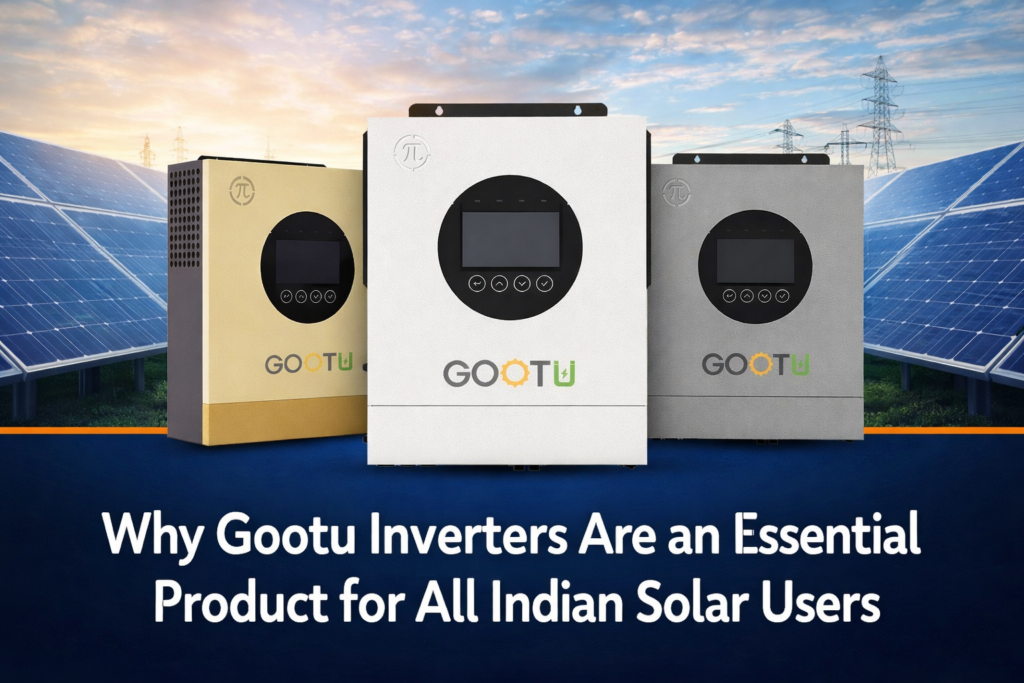
Among the many brands available in the Indian market, Gootu Solar Inverters have emerged as one of the most reliable, efficient, and future-ready solutions for Indian solar users. Whether you are a homeowner, business owner, farmer, or industrial user, Gootu inverters have become an essential product for anyone serious about solar energy.
This blog explains why Gootu inverters are perfectly suited for Indian conditions and why they are becoming the preferred choice across the country.
1. Designed for Indian Power Conditions
One of the biggest challenges in India is unstable grid power—voltage fluctuations, frequent outages, and inconsistent frequency.
Gootu inverters are specially designed to handle:
Low voltage and high voltage grid conditions
Frequent power cuts in rural and semi-urban areas
Poor-quality grid supply without damaging the system
This makes Gootu inverters ideal for Indian homes, villages, towns, and industrial zones where grid stability cannot be guaranteed.
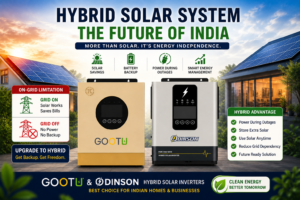
2. Advanced Hybrid Technology for Maximum Savings
Gootu offers hybrid solar inverters, which means:
You can use solar power, battery power, and grid power together
Solar energy is prioritized first
Excess solar can charge batteries or support loads directly
Hybrid technology allows Indian users to:
Reduce electricity bills drastically
Achieve backup during long power cuts
Maximize solar utilization without wastage
For Indian users who face both high electricity tariffs and outages, hybrid inverters are no longer optional—they are essential.
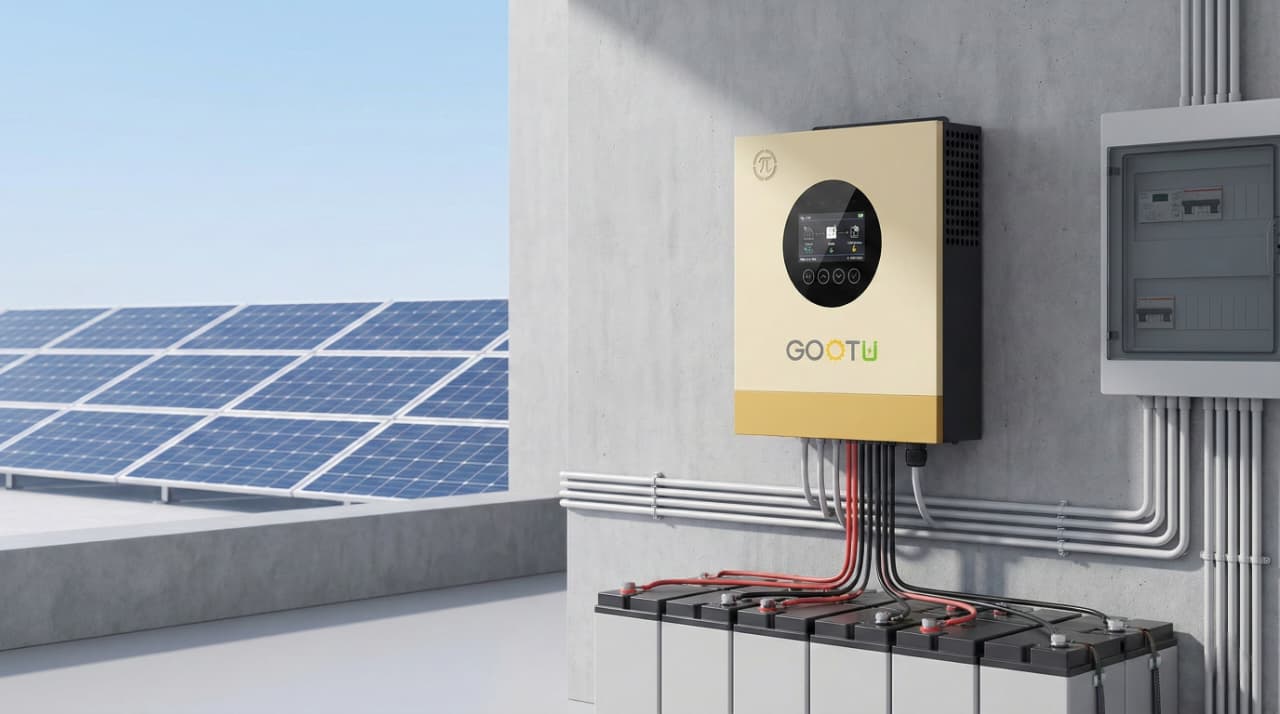
3. Full Compatibility with Lithium and Lead-Acid Batteries
India is rapidly moving towards lithium batteries due to their long life, fast charging, and higher efficiency.
Gootu inverters support:
Lithium Iron Phosphate (LiFePO₄) batteries
Lead-acid, tubular, and SMF batteries
Parallel battery configurations for higher capacity
With built-in BMS communication and battery protection, Gootu inverters ensure:
Safe charging and discharging
Longer battery life
Accurate battery monitoring
This makes Gootu future-ready as India shifts completely to lithium-based energy storage.
4. High MPPT Efficiency for Indian Sunlight Conditions
India receives abundant sunlight, but intensity varies throughout the day due to:
Dust
Heat
Seasonal changes
Cloud cover
Gootu inverters come with high-efficiency MPPT (Maximum Power Point Tracking) technology that:
Extracts maximum power even in low sunlight
Improves overall solar generation
Works efficiently in hot Indian climates
High MPPT efficiency ensures that every ray of sunlight is converted into usable electricity, increasing ROI for Indian solar users.
5. Wide PV Voltage Range – More Design Flexibility
Gootu inverters support wide PV input voltage ranges, allowing:
Flexible solar panel configurations
Longer solar string design
Better performance in rooftop and ground-mounted systems
This is especially useful in India where:
Roof sizes vary widely
Orientation and shading differ from site to site
Installers and users get more freedom while maintaining top performance.
6. Strong Build Quality for Harsh Indian Environments
Indian solar systems face harsh conditions:
Extreme heat (45°C+ in many states)
Dust and pollution
Humidity and monsoon rains
Gootu inverters are built with:
High-quality components
Efficient thermal management
IP-rated protection in selected models
This ensures long-lasting performance, minimal breakdowns, and low maintenance costs—critical factors for Indian users.
7. Intelligent Monitoring and Smart Features
Modern Indian users want control and visibility. Gootu inverters offer:
Smart LCD displays
Mobile app and Wi-Fi monitoring (model dependent)
Real-time data on solar generation, load, battery, and grid
Users can:
Track energy savings
Detect faults early
Optimize usage patterns
Smart monitoring makes solar systems more user-friendly and transparent.
8. Cost-Effective Without Compromising Quality
One of the biggest reasons Gootu inverters are essential for Indian users is value for money.
Compared to many imported brands, Gootu offers:
Competitive pricing
Advanced features
Reliable after-sales support
This makes Gootu an excellent choice for:
Middle-class households
Small businesses
Commercial and industrial users
Affordable pricing ensures solar adoption reaches every level of Indian society.
9. Reliable After-Sales Support in India
In India, after-sales service is as important as product quality.
Gootu inverters are supported by:
Indian distributors and service partners
Faster service response
Easy availability of spares
This local support system gives users confidence and peace of mind for long-term solar investment.
10. Perfect for Homes, Businesses, Farms, and Industries
Gootu inverters are versatile and suitable for:
Residential rooftops
Shops and offices
Schools and hospitals
Farms and irrigation systems
Factories and warehouses
From 3kW to high-capacity models, Gootu meets the diverse power needs of Indian users.
11. Supporting India’s Clean Energy Mission
By choosing Gootu inverters, Indian users contribute to:
Reduced carbon footprint
Lower dependency on fossil fuels
Government renewable energy goals
Solar energy is not just a personal investment—it is a national responsibility, and Gootu enables that transition effectively.
Conclusion
Gootu inverters are not just another solar product—they are a complete power solution designed for India.
With:
Hybrid technology
Lithium battery support
High MPPT efficiency
Strong build quality
Smart monitoring
Affordable pricing
Gootu inverters have become an essential product for all Indian solar users who want reliability, savings, and future readiness.
If you are planning to invest in solar energy or upgrade your existing system, choosing a Gootu inverter is a smart, safe, and sustainable decision for India’s power needs.